

This article was first published on Nov. 29, 2025. It’s now being made available for free in the public interest.
The Jamaican government has announced it won’t be publishing the names of the missing or the dead from Hurricane Melissa.
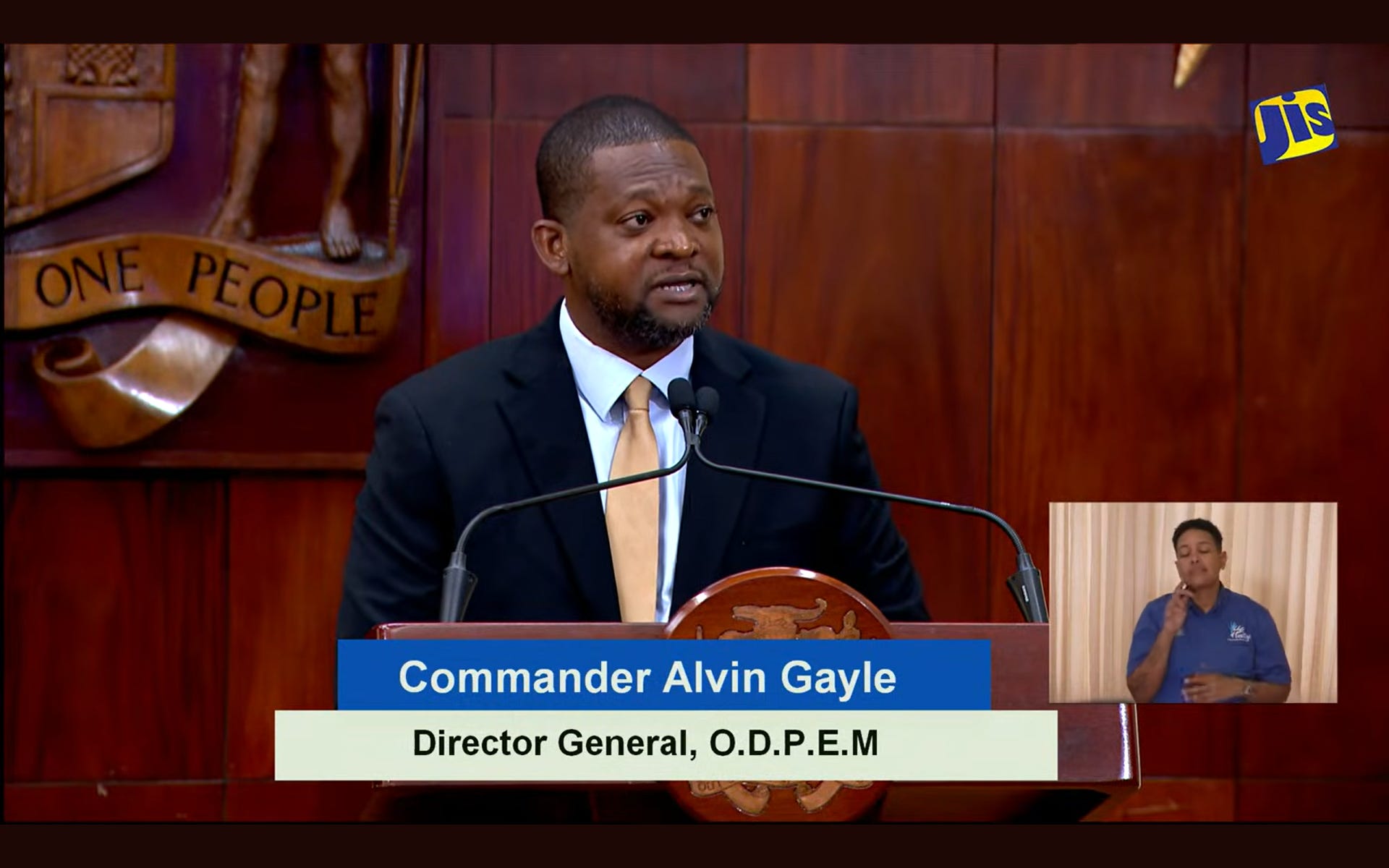
At a Nov. 26 press briefing, the head of the Office of Disaster Preparedness and Emergency Management (ODPEM), Commander Alvin Gayle, was asked by 18º North why is it that the police can routinely publish the names of Jamaicans who go missing, but in the case of those who went missing after the storm, the government has chosen not to release the names?
Gayle answered that for both the missing and the dead, “The police and the families are treating with those names as per their own protocols. So, we will not be publishing these names.”
However, he didn’t say what those protocols were and why he wouldn’t be releasing the names. The Jamaica Constabulary Force wouldn’t comment.
The Toll of those Missing and Dead in Jamaica
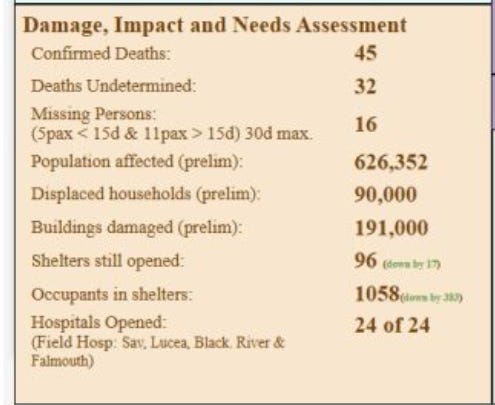
The government has determined that there were 45 confirmed deaths from the hurricane, which when broken down by parish, show that St. Elizabeth and Westmoreland recorded the most at 18 and 15, respectively. Thirty-two deaths were “undetermined,” and 16 persons are missing.
However, since the passage of the storm on Oct. 28, there have been doubts about the number of deaths.
Those concerns were elevated when Member of Parliament for Westmoreland Eastern, Dr. Dayton Campbell, told the House of Representatives on Nov. 4 that he knew of 25 deaths in his constituency alone at a time when the government’s official count for the whole country was 32.
Campbell also revealed that while funeral homes came for bodies in some instances, community members had buried bodies in other instances.
To that, Prime Minister Dr. Andrew Holness responded that the accurate account of deaths was “of particular concern” to him, and he pledged on the same day that every Jamaican who died as a result of the storm would be counted.
“We will recover all bodies, even if we have to exhume, and we will go through a process of proper identification and, where possible, determination of death. The science is there to do it, and we will do it,” Holness said. “We have to account for every Jamaican who has lost their life because we have to account to their families as well, and we have to get a full understanding of the impact of the disaster.”
However, it’s not clear how Holness will deliver on that promise if the names aren’t made public, and how the public will know for sure that he has delivered on his pledge.
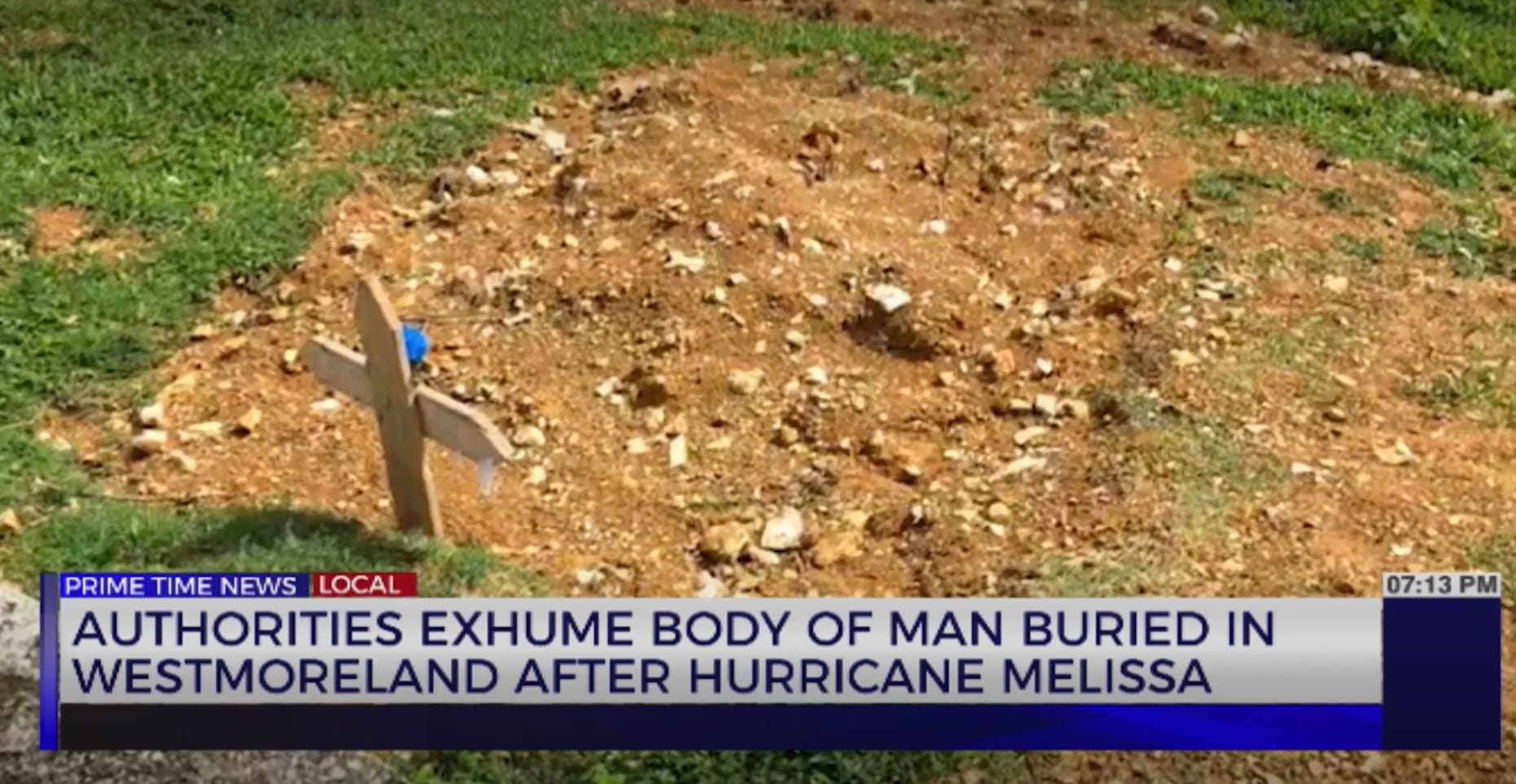
TVJ News, for example, reported on Nov. 26 that it had tried unsuccessfully to confirm whether hurricane victim Basil Clarke’s body, which was exhumed that day, had been included in the official death count, since his family had reported his death to the police before burying him in their backyard. The police had reportedly been unable to handle the body themselves in the early days after the storm.
At a Nov. 19 press conference —in Holness’ presence — 18º North asked ODPEM for a list of names of those who died so the press could crosscheck who is on the list compared to the numbers being reported and so that family members could determine if their loved ones were on it. However, Commander Gayle declined.
Gayle merely answered, “We have it, we have cross-referenced it through our police investigations and so on, so we’re fully confident in those matters. They also investigated. But we’ll leave those matters in terms of putting the names out there for the families to treat with.” What exactly the families are supposed to do isn’t clear. Prime Minister Holness, who was sitting right in front of him at the time, didn’t object to what Gayle said.
Names Released In Other National Tragedies
While 18º North couldn’t find a list of names of victims from other hurricanes in Jamaica, there are instances of names recorded from other national tragedies.
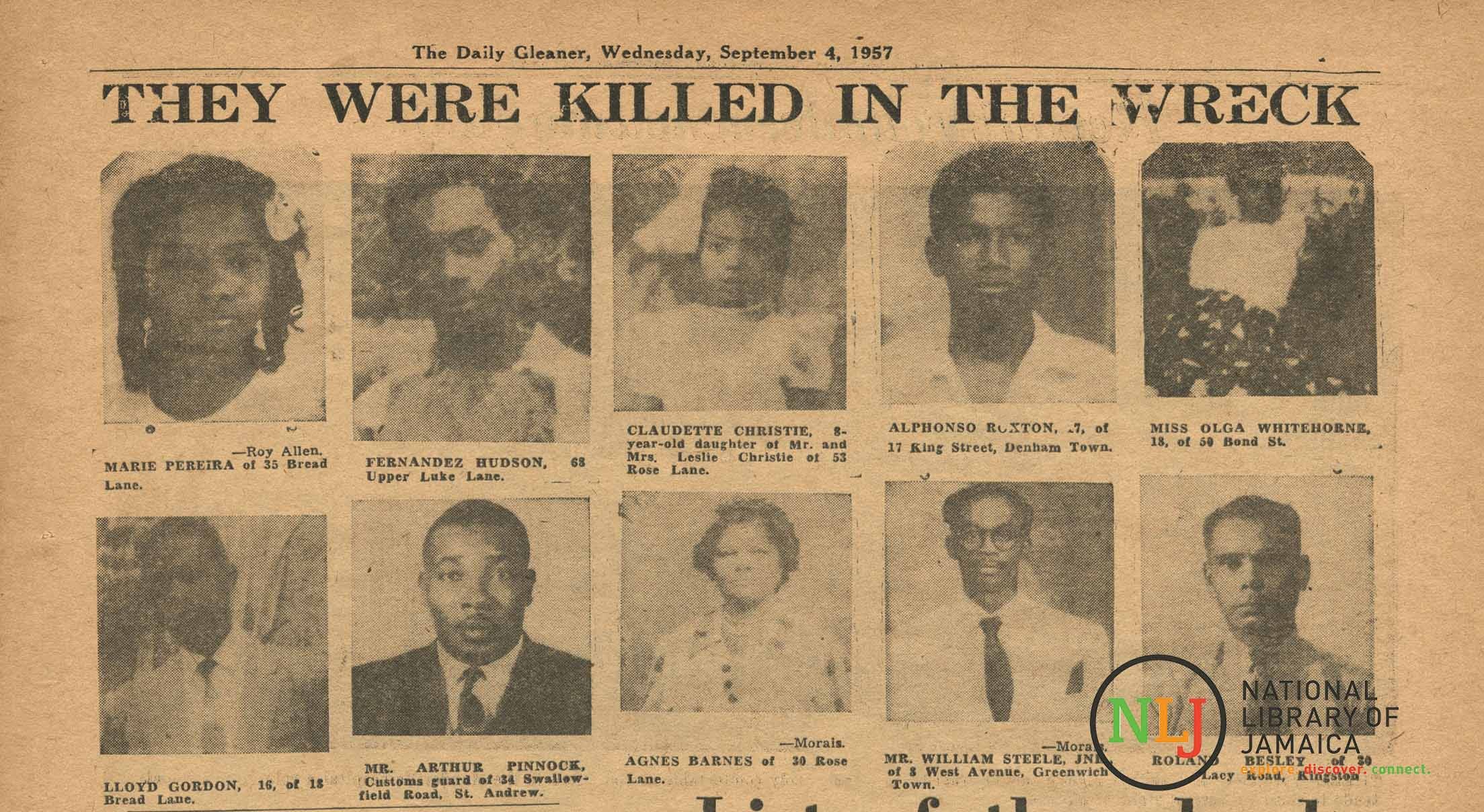
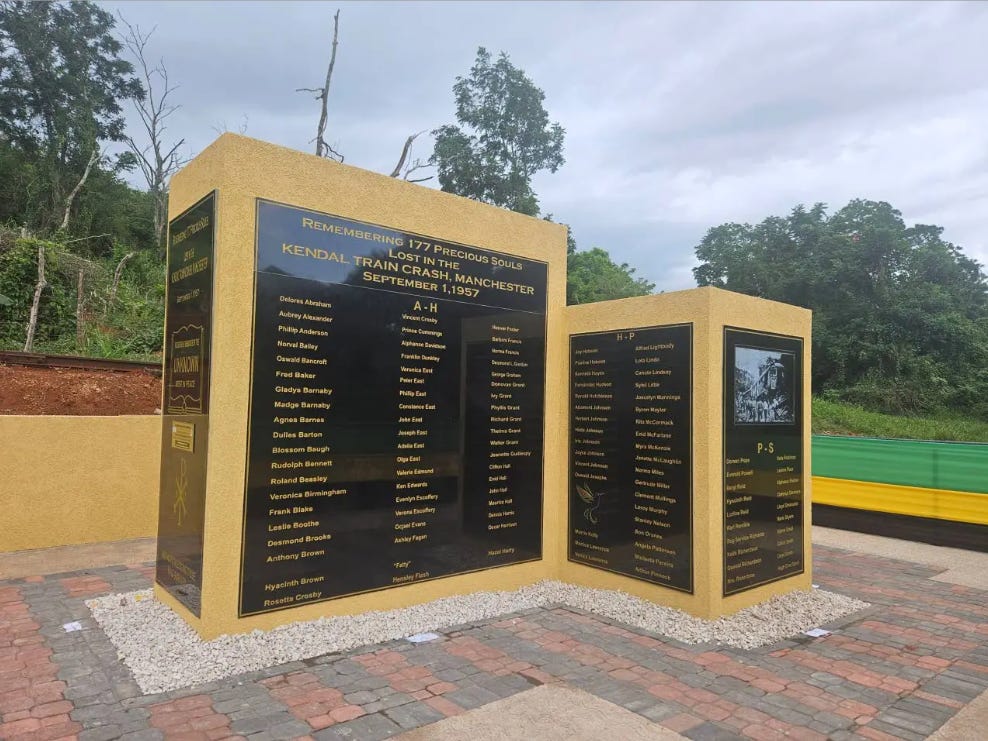
For example, within days of the Kendal train crash that killed nearly 200 people on Sept. 1, 1957 —before Independence from Britain in 1962 —the names of a few of the victims, their ages and addresses were published in The Daily Gleaner, based on a clipping included in a collective of the crash by the National Library of Jamaica. Many decades later in September 2025, the government unveiled a monument bearing 177 of the names.
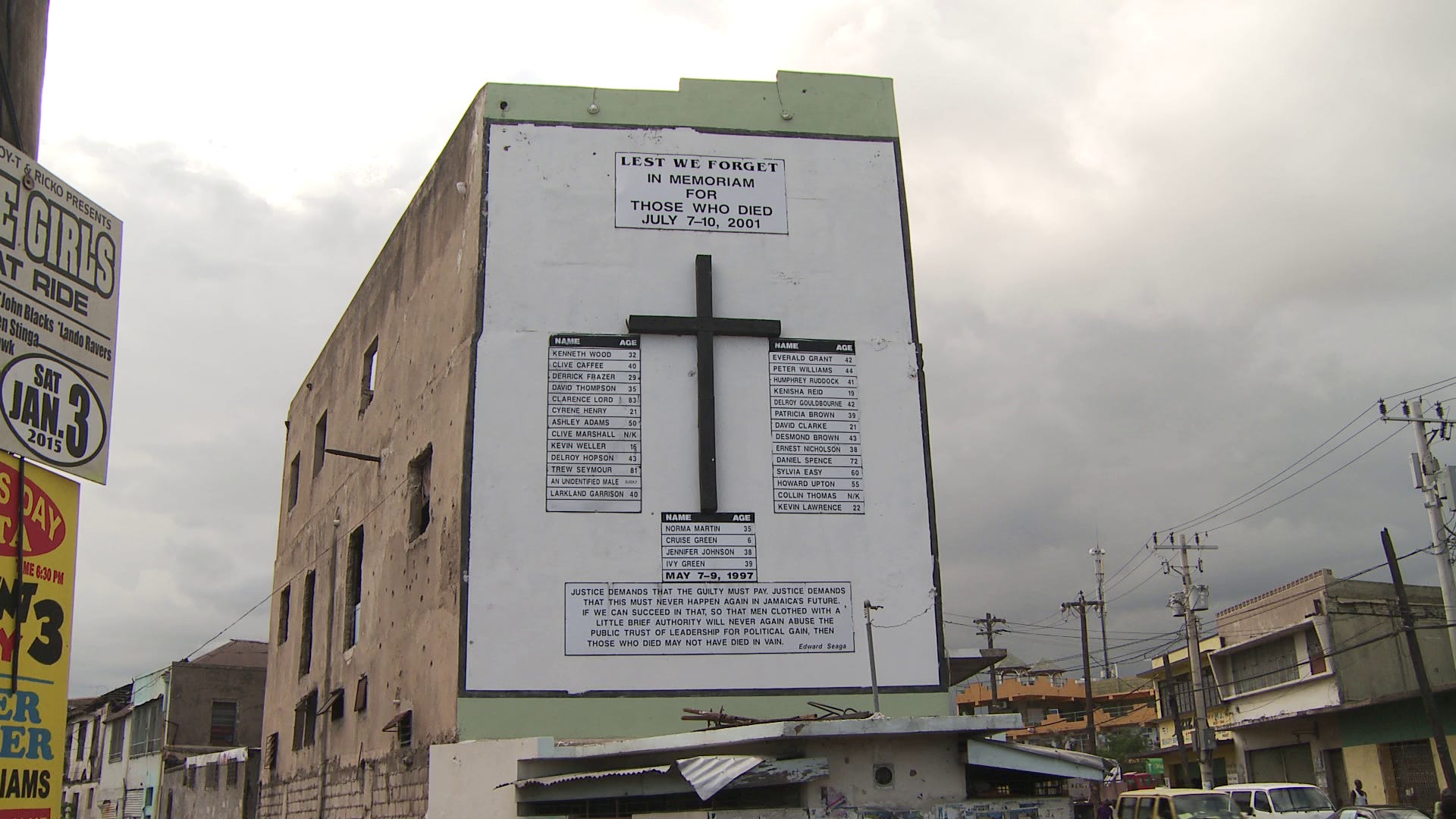
A memorial erected in downtown, Kingston also bears the names and ages of more than 30 lives lost in two separate gun battles between the security forces and alleged gunmen in May 1997 and July 2001.
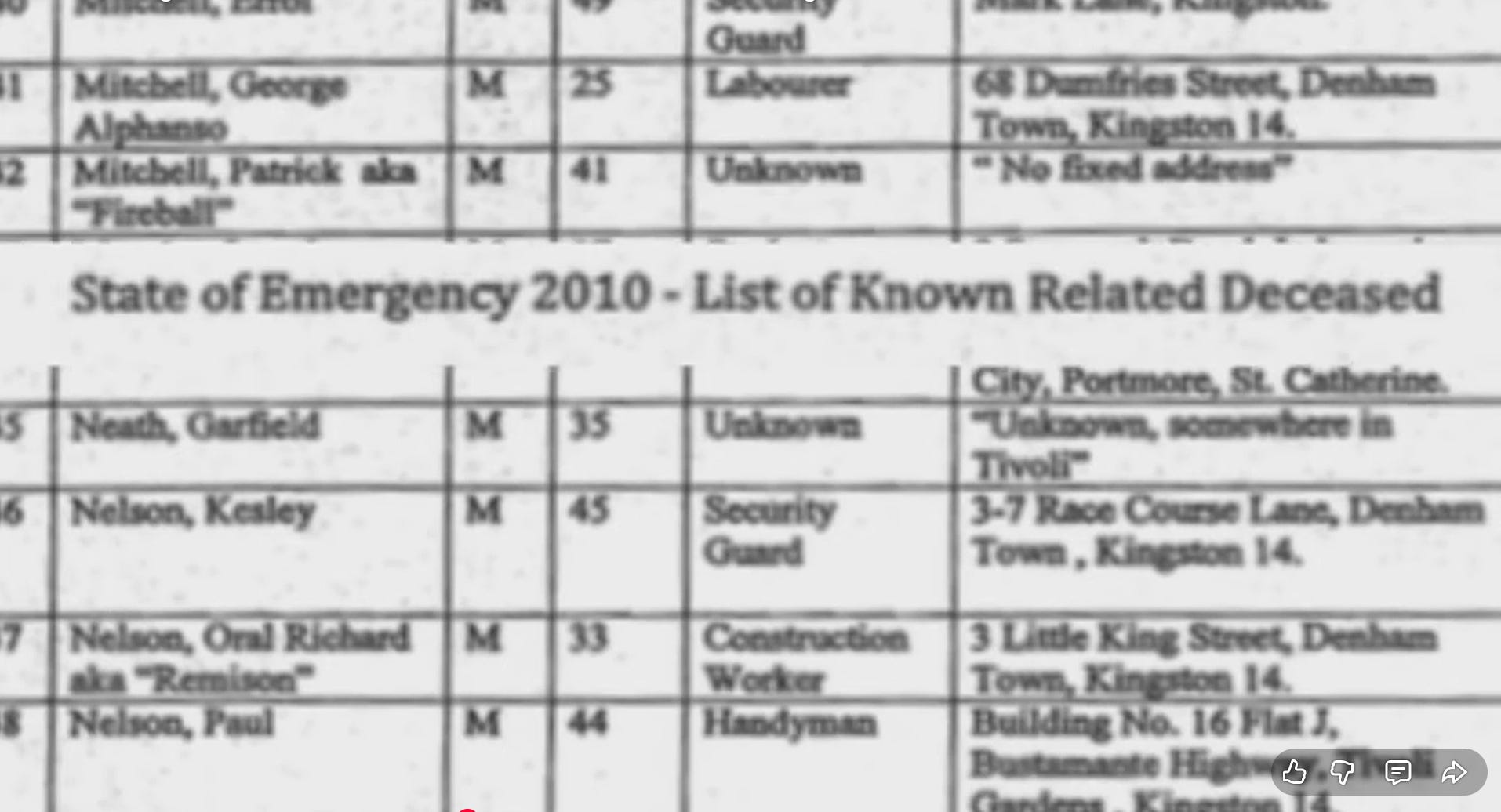
And later, from the 2010 operation by the security forces in West Kingston in the hunt for drug lord Christopher “Dudus” Coke who was wanted in the United States, there was also a list with the identities, ages, occupations and addresses of the 76 people killed. That list was ultimately used by 18º North in a 2015 documentary to prove that there were more victims than the official count.
Why is Accuracy of the Death Toll Important?
An accurate account of how many people were killed, how they died and where they died isn’t just important for the record, given the history-making nature of Melissa, but it also helps reveal actions that can be improved upon so there can be better disaster planning in the future to keep people safe.
For instance, a NBC News examination of death records obtained from local and state authorities after Hurricane Ian, which made landfall in Florida on September 28, 2022 and became one of the deadliest to hit the U.S. in 20 years, revealed that the highest number of deaths in that state — 61 of the at least 148 people that perished — were from Lee County, which took a day longer than neighboring counties to issue a mandatory evacuation order.
In addition, most of those who died were over age 65, which could signal a need for more to be done to help the elderly in the future.
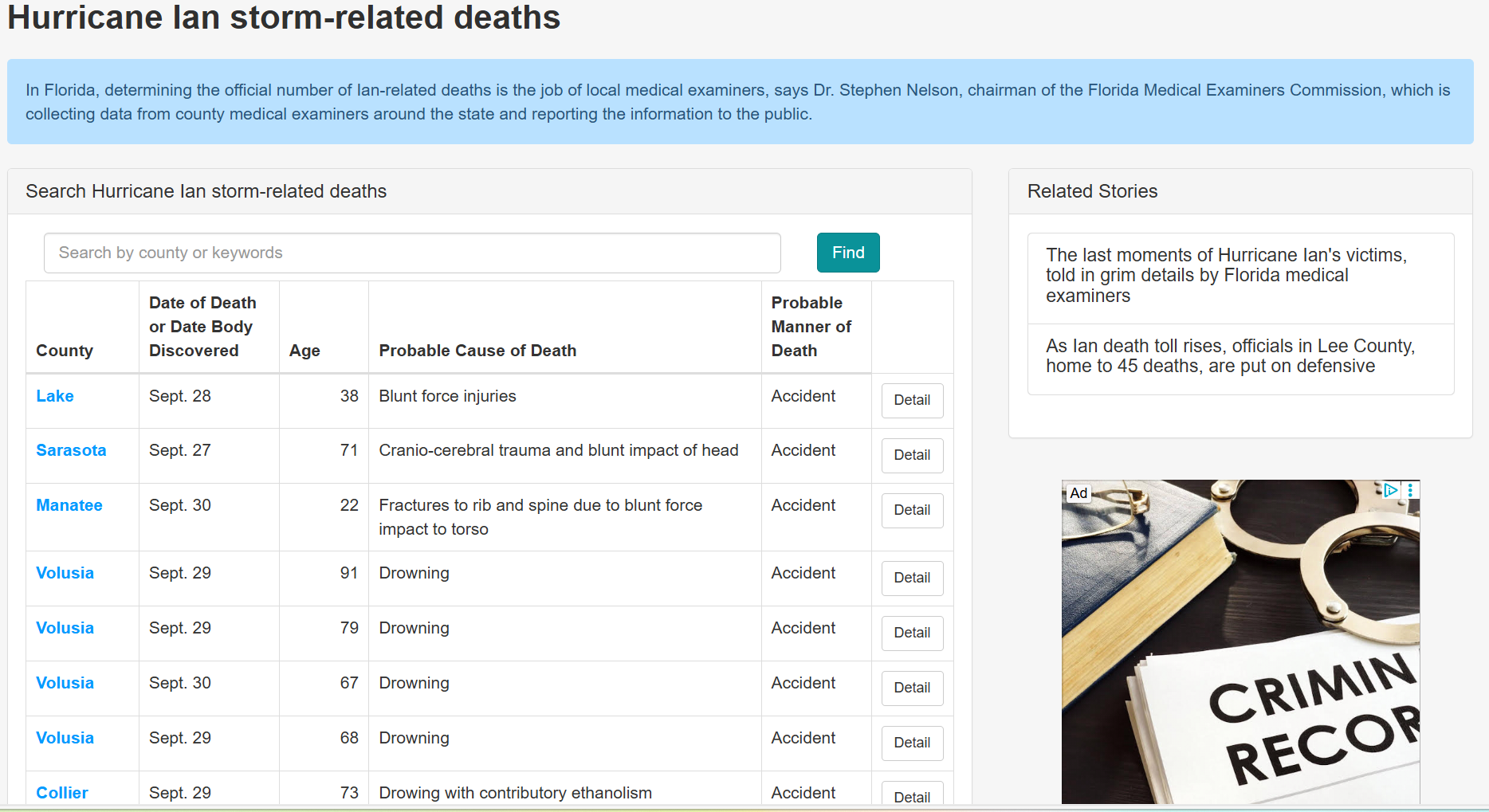
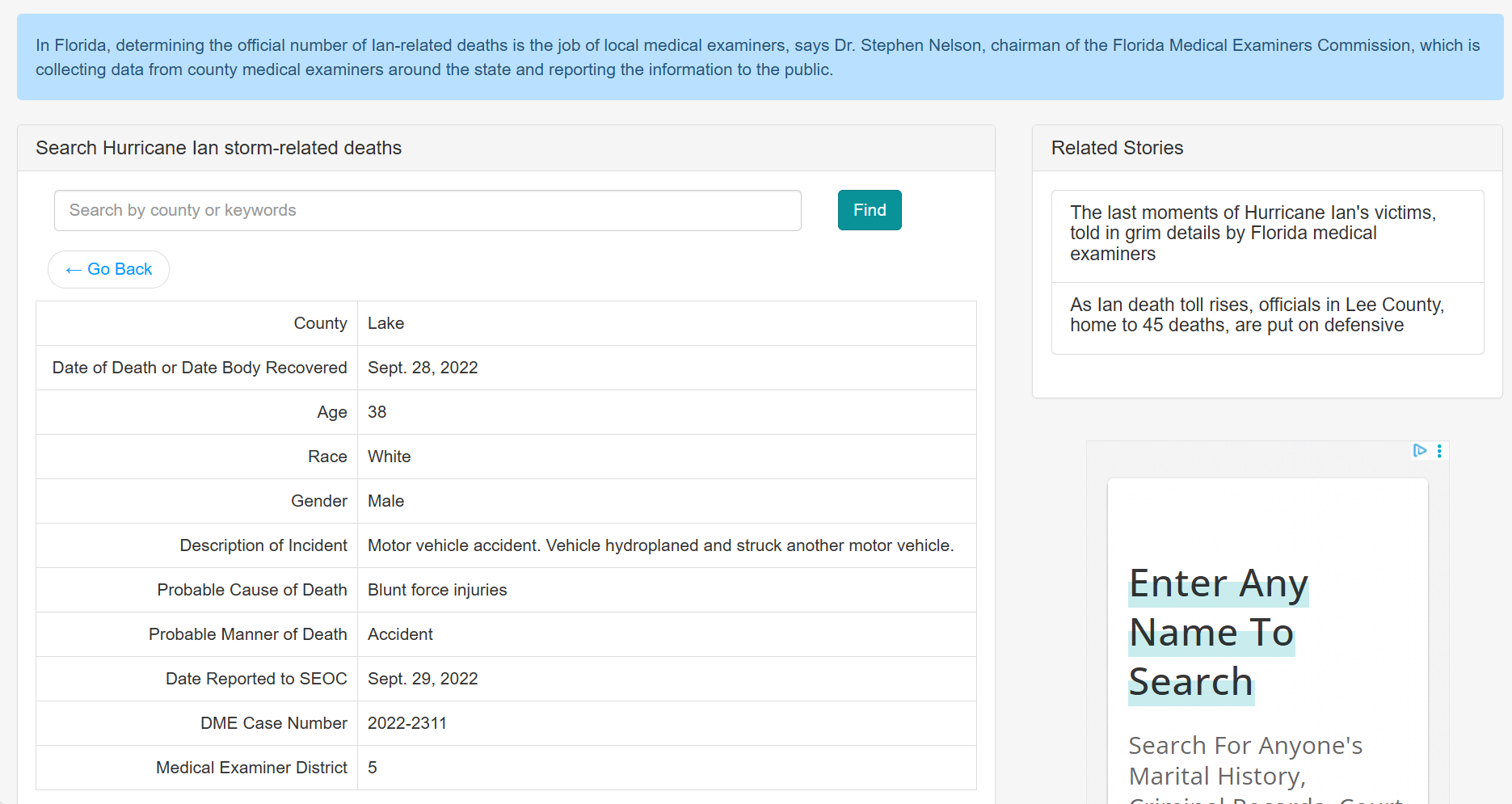
A database published by the Fort Myers-based News-Press of about 100 of Ian’s victims in Florida lists county; date of death or when the body was discovered; age; probable cause of death and manner of death; and a button where you can click for more details like gender and the specifics of how the person died. Of note, the database doesn’t list names.
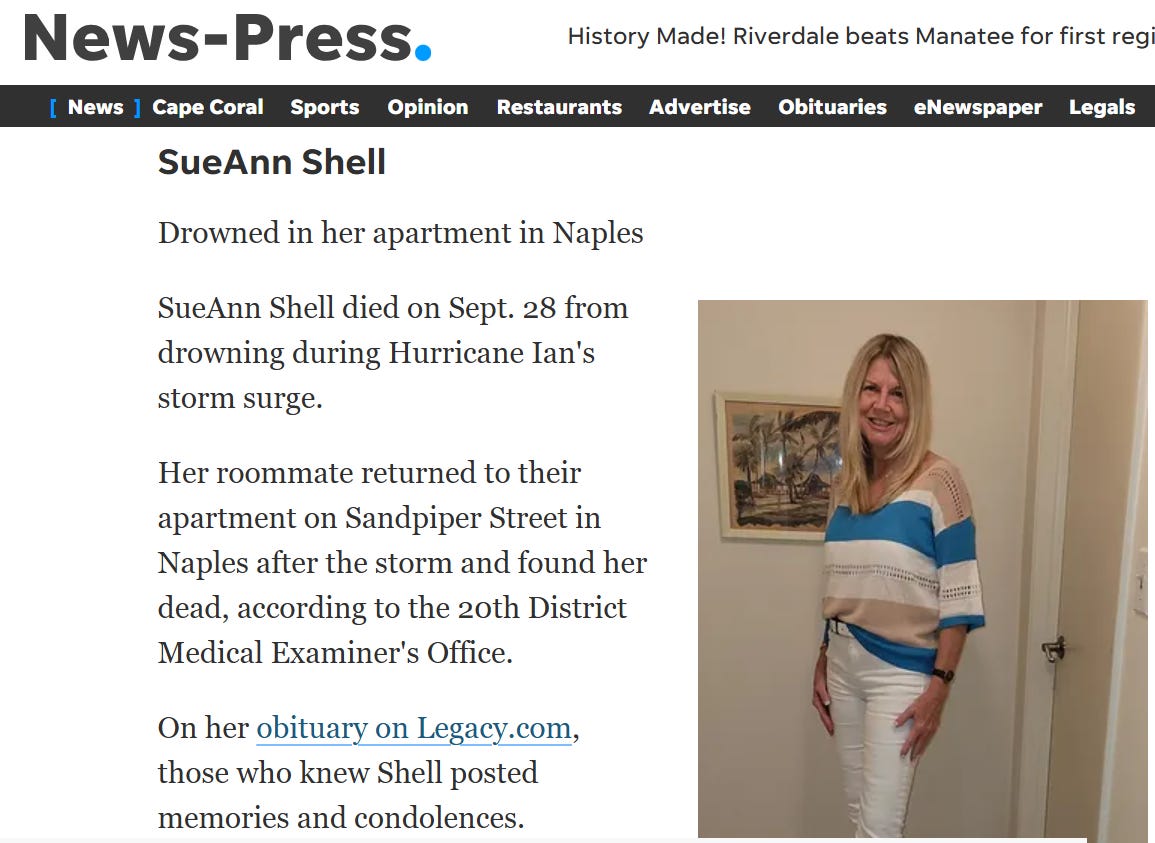
However, within three weeks after the hurricane, News-Press published an article with some obituaries on its website with pictures, names, ages and the circumstances of how they died from the storm, citing in some cases, an office of the medical examiner as the source.
Ethical and Legal Considerations in Releasing Names
Joel Reidenberg, who teaches law at Fordham University in New York and has examined the issue of releasing the names of those missing or unaccounted for in natural disasters told KUOW public radio in Seattle in 2014 that the practice of reporting names of the missing after disasters is ad hoc. As to whether to list names, he said some of the considerations are: What’s the benefit to the victim? What are the potential risks of publicly releasing the name of the individual thought to be missing at that time, like a battered spouse who has a protection order against an abusive partner? What’s the risk that the names on the list may cause further confusion and distress to the families unnecessarily? Reidenberg also advised in a report he co-authored that entities consider local laws in their jurisdiction.
In Jamaica, there’s an inherent right to privacy embedded in the Constitution and the Data Protection Act (DPA), which passed in 2020.
However, according to two Jamaican data protection experts, who didn’t want to be named, in the case of natural disasters and life-or-death situations where the sharing of information may be important to try and save them, the DPA doesn’t prohibit personal data, including names of missing persons, from being made public.
Under the law, the experts say the information of deceased persons may also be shared in matters of a public nature in the public interest like Hurricane Melissa given the scale of the disaster and its importance to the general public and the functions for entities like ODPEM to identify and analyze the disaster.
One of them cautioned, however, that the government should avoid publishing more information than needed based on principles in the DPA like data minimization; accuracy; and making sure that the manner of disclosure doesn’t cause unnecessary harm or distress. So, names and general demographic descriptors might be acceptable while cause of death requires more thought because some details might reveal or imply sensitive health information.
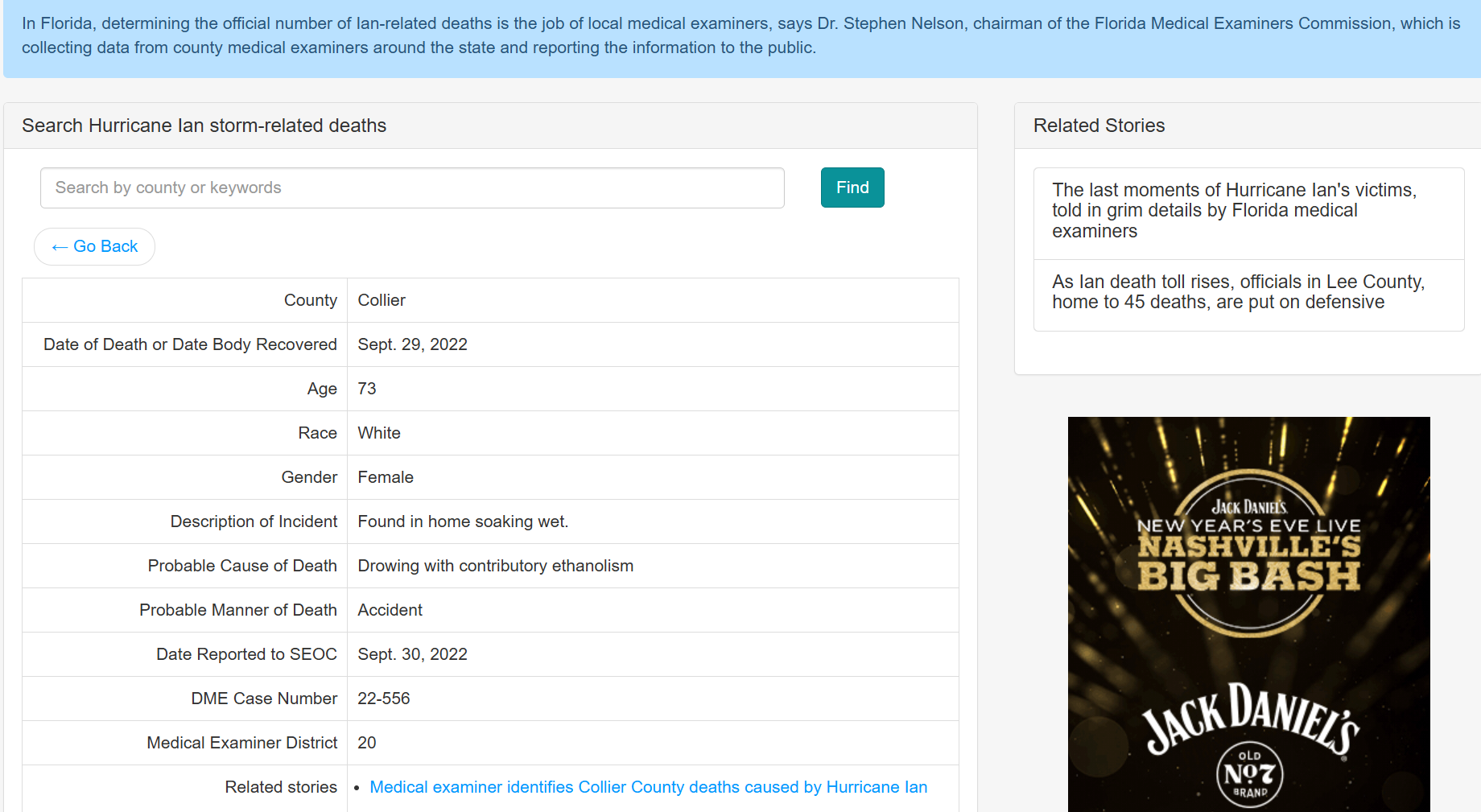
On causes of death, ODPEM has not defined what’s considered a hurricane death. The Jamaican state entity has also not said whether it has been or will start including indirect deaths — which are those not directly related to the storm but would otherwise not have happened if not for the storm.
Should the 10 persons that have died as of Nov. 26 from an outbreak of leptospirosis since Melissa, for instance, be added to the death count?
Until officials disclose the names of Hurricane Melissa’s victims or justify their refusal for providing more identifying information, families like Clarke’s in Westmoreland have no way of knowing whether their grief was ever formally acknowledged, which can breed hurt and suspicion. And when a prime minister can publicly claim concern about the death toll even as his government blocks the details that can help confirm it, suspicion may be less about cynicism to the reasonable person and more about common sense.
####
If you’ve read this full post, you’ll probably enjoy the benefits of being a paid subscriber, which allow you to get full access to these kinds of articles FIRST and to our FULL archive of stories. So, ACT NOW. Become a paid subscriber today!
Related Stories:
A New Boost For Transparency, But More Clarity Still Needed on Jamaica’s Hurricane Funding